




1. Introduction — Why The Name “QuikConsole com” Confuses Users
When someone types the keyword QuikConsole com into a search engine, the first feeling many people get is confusion. Why? Because the name is used on the internet in more than one meaning. Sometimes people refer to it as a blog / content website that posts articles about tech, marketing, gadgets, finance and trends.
Sometimes people refer to it as a future developer platform that will combine multiple server terminals into one dashboard. And recently, some people also refer it to a home entertainment console controller that claims it can unite Xbox, PlayStation, Nintendo, Apple TV etc into one control hub. So, the confusion is natural. This article’s purpose is to finally separate each identity cleanly, and then unify the truth. We want users, developers, gamers, marketers, bloggers and investors to understand exactly what this keyword actually stands for, what is existing today, what is imagined, and what is only concept. This clarity is very important in 2025 SEO because Google now values “Entity clarity”. When a keyword is confused online, ranking becomes unstable and users do not understand what to trust. So this guide will provide value: we will deeply break down each face of QuikConsole com and help the user understand which version applies to their need.
2. QuikConsole com — Unpacking Identity Clearly
The keyword QuikConsole com is not a normal one-dimensional brand name. The domain name appears on multiple types of posts and multiple categories of online discussions. So we cannot talk about QuikConsole com as if it was only one product. The dual nature originally was 2 but recently it expanded into 3. First, it is used as a multi-topic blog where users can read online content about digital life, crypto, money, tech, gadgets, apps and even lifestyle content. Second, it is connected to the idea of a future unified console for developers to combine servers, databases, Docker, and Linux terminal controls into one dashboard. Third, it is referenced inside consumer technology discussions as a possible home entertainment console manager for PlayStation, Xbox, Switch and streaming boxes etc. This triple identity is why the internet shows three meanings. The problem is not that the domain is fake — the problem is that different parts of the internet connected a single name with three different sectors. So our job is to unpack it clearly, with clean separation, and allow users to recognize which version is relevant for their need.
3. The Hub Side: Articles About Tech, Finance, Digital Marketing, Lifestyle
Let us begin with the identity that actually exists in real-time on the internet today — the content hub. In this meaning, QuikConsole com is a multi-topic blog which covers topics like technology reviews, finance comparisons, digital marketing strategies, crypto trends, gadgets, cloud services, security improvements and more. The publishing style is also easy to recognize. Content is usually written in short paragraph chunks that break down complicated matters into simple language for everyday readers. This is why the audience includes students, professionals, bloggers, small business decision makers, affiliate marketers, and even investors who want to quickly understand new technologies or financial trends. The blog also blends professional topics with lifestyle content — like celebrity culture articles, travel suggestions, unique product reviews, entertainment analysis etc. This is a modern strategy because a lot of SEO blogs today mix educational topics and personal topics to increase click-through rate and increase session time. Conclusion: this identity is reliable and accessible today, and this is the only identity that is fully active right now.
4. The Vision Side: Future Unified Developer Console Platform
Now we move to the second identity — the vision of a developer platform. In this interpretation, QuikConsole com is imagined as a sophisticated cloud console platform that allows developers and DevOps teams to manage all servers. Databases, cloud instances, docker containers, microservices and SSH connections in one single interface. This is not a trivial idea — because developers waste a lot of time switching between 5 to 15 different windows every day. The potential user group includes DevOps engineers, SRE (Site Reliability Engineers). Cloud System Admins and backend developers who manage deployment pipelines, monitor services, handle servers and troubleshoot breakdowns. This is a valuable concept because unified control reduces human error. Improves standardization across teams and accelerates delivery speed. However, this platform vision is mostly seen as a proposed idea or concept associated with the name. There is no official verified global platform yet. But the concept continues to circulate online because the problem of multi-console environments is real and growing every year.
5. Core Feature Expectations of a Developer Console Platform
If the developer platform version of QuikConsole com becomes real, what would people expect from it? First, a multi-server connection dashboard where all cloud and server assets can be managed in one place. Second, the ability to run commands, view logs, see metrics, trigger deployments and monitor status without switching windows. Third, mental resource saving — because brain switching between multiple terminals is one of the biggest sources of error in operations. Fourth, easier onboarding for new employees because instead of exposing them to direct SSH into 20 servers, they get a controlled dashboard with limits and roles. This vision fits modern organizational needs: developer experience (DX), standardization, productivity, and automation. Companies are moving away from ad-hoc manual server management towards centralized automation. So if QuikConsole com’s developer version would ever be built — it would have a massive market demand.
6. Breaking Silos: Multi-Platform Integrations
The biggest competitive advantage for any unified console platform is integration. Today no serious cloud environment is 100% AWS or 100% Azure or 100% on-prem. Real enterprise stacks combine multiple cloud vendors + virtualization + containers + native databases + third-party SaaS monitoring. So the future platform must support API-based integration with all major providers. For example: running shell commands on Linux servers, checking container logs of Docker pods, querying PostgreSQL or MySQL databases directly, and seeing Kubernetes cluster state — all inside one interface. This integration layer is what breaks silos and gives full stack visibility. Enterprises love tools that connect all systems because fragmented dashboards increase reaction time and risk. So the integration topic is core to the QuikConsole com developer vision.
7. Security Responsibilities of Such a Platform
When you unify access to servers and consoles, security becomes 10x more critical. Any platform like the developer vision of QuikConsole com must support enterprise-grade security. That means MFA authentication, role-based access control, secure SSH key management, strong encryption at rest and transit, and strong credential policy enforcement. No developer wants to trust a console platform that leaks credentials. No company will adopt such a system unless it is security strict. So if this product version ever becomes real, security will be the number one selling point. In the cloud era, developers are the new security perimeter. So the platform must reduce human mistakes while also protecting infrastructure.
8. Command History & Auditing Layer
Traditional terminal histori are stored locally and vanish when you close the window. In collaborative engineering teams this is a disaster because the organization loses institutional memory. The unified console platform version of QuikConsole com solves this with persistent command history logging, audit trails, metadata on who executed what, and when. This helps compliance reporting, root cause analysis, internal investigation, and knowledge transfer between seniors and juniors. In short — logging turns chaotic terminal work into institutional knowledge.
9. Real Life Use Cases
In practice, this platform vision would benefit several groups. DevOps teams running CI/CD pipelines could trigger deployments from one dashboard. System administrators could see all servers in one view during outages. And during post-incident audit, developers can compare recent actions to discover the cause of failure. These are real-world application scenarios that show the value of the vision.
10. Third Meaning: Consumer Gaming + Home Entertainment Hub
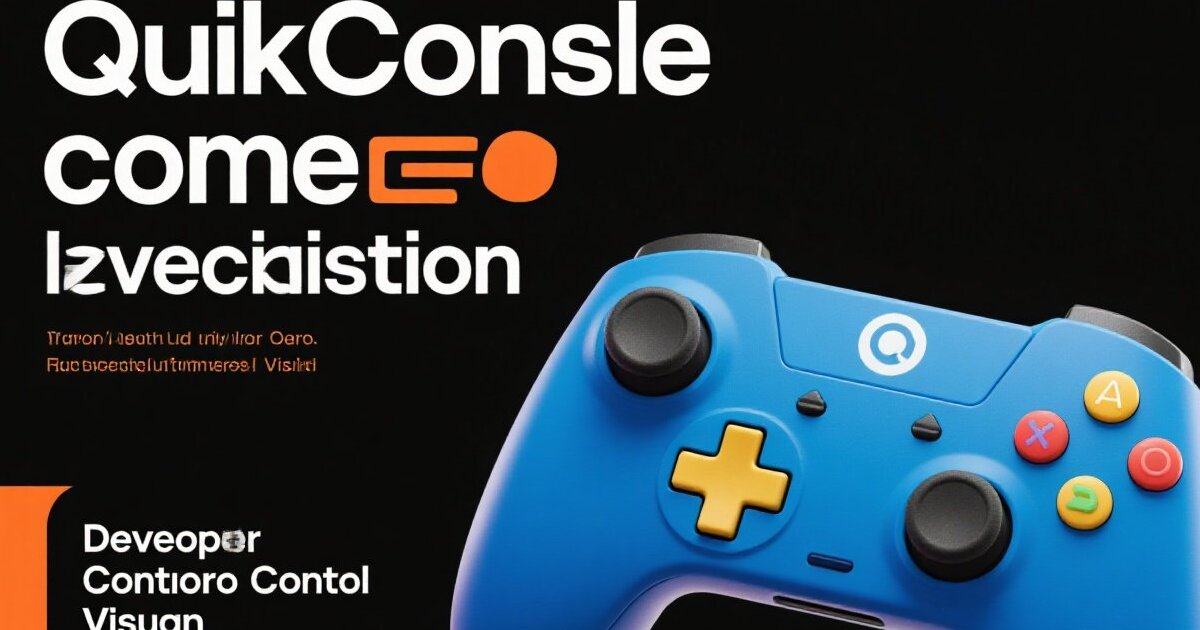
Now the third identity. This is the mainstream consumer version — where people describe QuikConsole com as a universal dashboard that lets users control PlayStation, Xbox, Nintendo Switch, Roku, Fire TV, Apple TV etc. from one unified interface. In this meaning, users can remotely check their console status, start downloads, manage parental controls, see storage usage, and monitor temperatures or network speed. This is very useful in multi-console households and for remote workers who travel a lot. So the gaming version of QuikConsole com is basically a “home entertainment ecosystem manager”.
11. Privacy & Limitations of the Home Entertainment Idea
The consumer version also requires trust and security. If a platform controls your consoles, your accounts, and your home entertainment network — then encryption, secure credential storage, MFA and privacy policy transparency become essential. The platform must clarify what data is stored, how long, and who can see it. Also, the home entertainment concept requires a stable internet connection and some device features may not work if the device manufacturer does not allow external remote control.
12. Final Verdict — QuikConsole com is a Term With Three Faces
Finally we simplify everything. When someone says “QuikConsole com” online, they might be talking about:
(1) The active blog that publishes tech + finance + digital content
(2) The developer console management platform concept
(3) The home entertainment gaming console control concept